Tissue Repair Research
Tendon, ligament and muscle injury studies, mostly in animals
Tissue repair research looks at how tendon, ligament, muscle and new blood vessels respond after injury. Nearly all of it is done in cells and animal models, mostly rats. Human data is thin: small trials of ARA-290 and of full-length thymosin beta-4, two small GHK-Cu tissue closure trials from the 1990s, and no controlled trial of BPC-157. This category holds four single compounds and three pre-blended vials made from them. Each compound’s research summary is linked below the products, and the certificate of analysis page shows which compounds have an independent lab report and which do not. All products here are research material for laboratory use.
Showing all 7 results
-
Tissue Repair Research
GHK-Cu 50mg, 100mg
Price range: $39.00 through $55.00 Select options This product has multiple variants. The options may be chosen on the product page
BPC-157
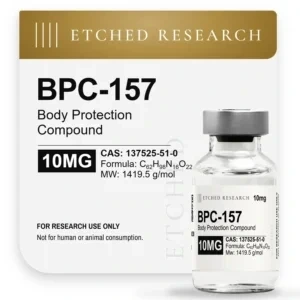
BPC-157 is a synthetic 15-amino-acid peptide whose sequence comes from a protein in human gastric juice. Most of its research looked at tendon and ligament models in rats. Nearly all of it used rats or cells, and no controlled human trial has been published.
See BPC-157 10mg or read what the BPC-157 research shows.
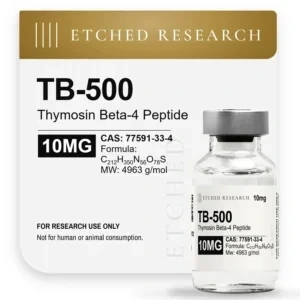
TB-500
Our TB-500 is full-length thymosin beta-4, a 43-amino-acid peptide found in nearly all cells. It has been studied in cell migration and new blood vessel growth. Most of its research is animal work, plus small Phase 2 human trials of the full protein with mixed results.
See the TB-500 10mg vial or the thymosin beta-4 study summary.
GHK-Cu
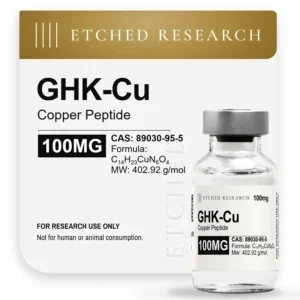
GHK-Cu is the copper complex of GHK, a tripeptide made of glycine, histidine and lysine. Researchers have studied it mainly in matrix remodeling and gene expression, in isolated cells and short animal studies.
See GHK-Cu 50mg and 100mg and the GHK-Cu research summary.
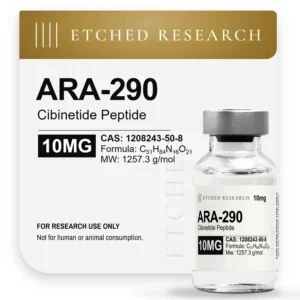
ARA-290
ARA-290, generic name cibinetide, is an 11-amino-acid peptide engineered from erythropoietin. It has small human trials, most in adults with nerve damage linked to sarcoidosis. It is on pre-order.
See Etched’s ARA-290 or the cibinetide trial record.
The blends
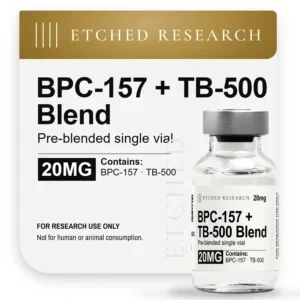
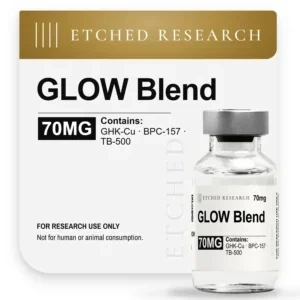
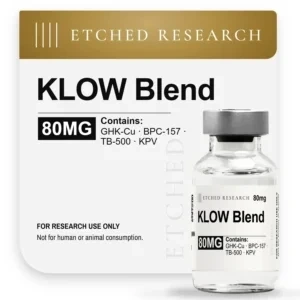
Three vials combine the compounds above, pre-blended in one vial. They are not kits. BPC-157 + TB-500 Blend 20mg holds 10mg of each. GLOW Blend 70mg holds GHK-Cu 50mg, BPC-157 10mg and TB-500 10mg. KLOW Blend 80mg holds the same three plus KPV 10mg, a peptide filed under Immune System Research. No study has tested a pre-blended vial, and the one rat study that gave BPC-157 and TB-500 together found no added benefit over either alone (Biçer et al., 2026).
See BPC-157 + TB-500 Blend 20mg and its research summary, GLOW Blend 70mg, KLOW Blend 80mg and the KLOW and GLOW research summary. All three are also listed under Single-Vial Blends.
Which of these have human trial data?
ARA-290 has small placebo-controlled trials, most in one rare-disease population. Full-length thymosin beta-4 has small Phase 2 trials. GHK-Cu has two small ulcer trials from 1992 and 1994, one positive and one no different from placebo. BPC-157 has no controlled human trial. No blend has been tested in people.
What is the difference between BPC-157 and TB-500?
They are two separate peptides studied in the same broad area. BPC-157 is 15 amino acids, with a sequence taken from a protein in gastric juice, and most of its work is on tendon and ligament models in rats. The TB-500 in our vial is full-length thymosin beta-4, 43 amino acids, studied in cell migration and new blood vessel growth. The one study that gave them together, in rats, found the pair did no better than either alone.
Is TB-500 the same as thymosin beta-4?
In this product, yes. The name TB-500 is also used for a short seven-amino-acid fragment, and this product is not that fragment.
Where are the lab reports?
Where an independent laboratory report exists for a compound, the measurements are published on the certificate of analysis page, including the compounds we hold no report for.
For research use only. Not for human consumption.