Growth Hormone Signaling Research
How the brain and pituitary trigger growth hormone release
Growth hormone signaling research looks at the chain that controls growth hormone: growth hormone releasing hormone (GHRH) from the hypothalamus, the growth hormone pulses the pituitary releases in answer, and IGF-1, a growth factor made downstream, mostly in the liver. The compounds in this category act at different points on that chain. Tesamorelin copies that brain signal. Ipamorelin works through the ghrelin receptor, a separate trigger for the same pulses. IGF-1 LR3 sits at the far end, an engineered form of IGF-1 used mostly as a cell-culture reagent. The human record runs from randomized trials for tesamorelin to none for IGF-1 LR3. The certificate of analysis page shows which compounds have an independent lab report and which do not. All products here are research material for laboratory use.
Showing all 3 results
Tesamorelin
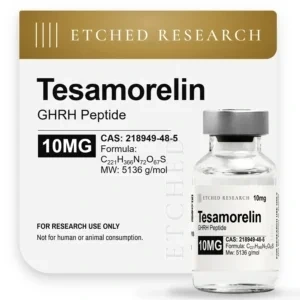
Tesamorelin is a 44-amino-acid analog of human GHRH, with a six-carbon hexenoyl group added to its first amino acid. Randomized trials, nearly all in adults with HIV-associated fat changes, measured visceral fat and IGF-1 (Falutz et al., 2007, 412 participants) and, in a later trial, liver fat (Stanley et al., 2014). A separate 20-week trial in adults aged 55 to 87 measured thinking scores (Baker et al., 2012).
See Tesamorelin 10mg or read the tesamorelin trial record.
Ipamorelin
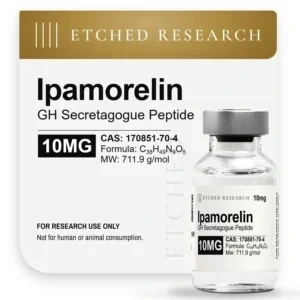
Ipamorelin is a five-amino-acid peptide that binds the ghrelin receptor on the pituitary. The paper that introduced it, working in rat pituitary cells, rats and pigs, reported growth hormone release without a rise in the stress hormones adrenocorticotropic hormone (ACTH) and cortisol beyond what GHRH produced (Raun et al., 1998). The human record is short: one pharmacokinetic study in healthy men, and one published trial in 117 bowel-surgery patients that found no significant difference from placebo on its main measure (Beck et al., 2014).
See the Ipamorelin 10mg vial or what the ipamorelin studies found.
IGF-1 LR3
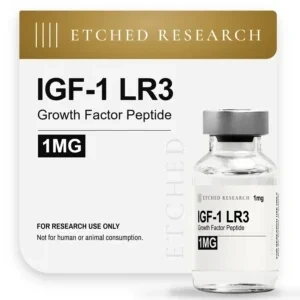
IGF-1 LR3 is IGF-1 with arginine in place of glutamic acid at position 3 and a 13-amino-acid extension on the front, 83 amino acids in all. Those two edits loosen its grip on IGF binding proteins, which is why cell-culture labs add it to serum-free media (Francis et al., 1992). Its animal record is a handful of short rat and guinea pig studies with split results, and we found no published human trial.
See Etched’s IGF-1 LR3 1mg or the Long R3 IGF-I study summary.
In the library, not in the shop
The research library also covers growth hormone signaling compounds Etched does not sell at retail. CJC-1295 is a GHRH analog whose small 2006 human trials used the long-acting “with DAC” form, which adds a chemical group (DAC) that binds albumin in the blood and measured hormone levels only. For CJC-1295 with ipamorelin, we found no published study that tested the two in combination. Native IGF-1 has human trials only in children with a genetic defect in the growth hormone pathway, and they measured height. Sermorelin is the first 29 amino acids of GHRH. Hexarelin binds the ghrelin receptor and a second receptor, which researchers have examined in heart tissue. Two short reads set compounds side by side: tesamorelin vs ipamorelin and CJC-1295 with and without DAC.
How the compounds compare
| Compound | Acts at | Size | Human record |
|---|---|---|---|
| Tesamorelin | GHRH receptor | 44 amino acids plus a hexenoyl group | Randomized trials, mostly adults with HIV |
| CJC-1295 (not in the shop) | GHRH receptor | Modified GHRH 1-29 fragment | Small 2006 trials, hormone levels only |
| Ipamorelin | Ghrelin receptor | 5 amino acids | One small kinetics study, one trial that missed its main measure |
| IGF-1 LR3 | IGF-1 receptor, downstream of growth hormone | 83 amino acids | None found |
Which of these have human trial data?
Of the three compounds in this category, tesamorelin has the largest human record: randomized trials, nearly all in adults with HIV, plus one trial in older adults (Falutz et al., 2007). Ipamorelin has one small pharmacokinetic study and one published bowel-surgery trial that did not beat placebo on its main measure (Beck et al., 2014). CJC-1295, which is not in the Etched shop, has small 2006 trials in healthy adults that measured hormone levels. IGF-1 LR3 has none that we found.
What is the difference between a GHRH analog and a ghrelin-receptor peptide?
Both prompt the pituitary to release growth hormone, but through two different receptors. Tesamorelin, CJC-1295 and sermorelin copy GHRH and bind the GHRH receptor. Ipamorelin and hexarelin bind the ghrelin receptor. Neither type is growth hormone itself, and no study cited on these pages compares tesamorelin and ipamorelin directly.
Is IGF-1 LR3 the same as IGF-1?
No. IGF-1 LR3 is an engineered analog of IGF-1, 83 amino acids against the natural 70. It swaps one amino acid at position 3 and adds 13 to the front, and in the first cell studies those edits left more of it free of IGF binding proteins (Francis et al., 1992).
Is CJC-1295 in the Etched shop?
No. CJC-1295 is not listed in the Etched shop, alone or in a blend. Its research summaries stay in the library because the compound is part of this research area.
Where are the lab reports?
Where an independent laboratory report exists for a compound, the measurements are published on the certificate of analysis page, including the compounds we hold no report for.
For research use only. Not for human consumption.