
Research-grade material. A Janoshik report for this compound is available on request. For research use only.
Research-grade material. A Janoshik report for this compound is available on request. For research use only.
Tesamorelin and Ipamorelin are frequently grouped together as “growth hormone peptides,” which is accurate in the broadest sense and misleading in the specific one. They act on the same axis through two different receptor families, and the research literature built around each reflects that difference.
Two different entry points to the same axis
Tesamorelin is a growth hormone-releasing hormone (GHRH) analog. It binds the GHRH receptor on the pituitary and stimulates the same pathway that endogenous GHRH uses, working within the body’s existing regulatory feedback loop rather than bypassing it. It carries the deepest and oldest research literature in this category, with GH and IGF-1 axis modulation data extending back further than most other GH-axis compounds, most extensively in the context of lipodystrophy research.
Ipamorelin is a ghrelin receptor agonist, structurally and mechanistically distinct from a GHRH analog. It stimulates growth hormone release through the ghrelin/GHS-R1a pathway, a separate receptor system from the one Tesamorelin engages. Ipamorelin’s research profile is notable for a comparatively selective GH-release effect in early pharmacological characterization, with less pronounced effect on cortisol and prolactin than some earlier-generation secretagogues in the same class.
Why the mechanism difference matters for a research design
A GHRH-receptor agonist and a ghrelin-receptor agonist are not redundant tools even though both increase GH release. They engage the axis at different points and are subject to different feedback dynamics. Some research designs investigate them in combination specifically because a GHRH analog and a ghrelin-receptor agonist are proposed to act synergistically on GH pulse amplitude, a combination-research question distinct from either compound’s standalone literature.
What the evidence base actually looks like for each
Tesamorelin carries the deeper and older research literature of the two. Ipamorelin’s literature is comparatively earlier-stage and more concentrated in pharmacological and animal-model characterization. Neither research base should be read as evidence for a use Etched does not make claims about. Both remain research compounds studied for their action on the GH axis, not products Etched represents as suited to any particular application.
The practical framing
A research design centered on the established GHRH pathway, or referencing its older and deeper literature base, points toward Tesamorelin. A design investigating the ghrelin-receptor pathway specifically, or interested in a comparatively selective GH-release profile, points toward Ipamorelin. Etched stocks both as single-compound 10mg vials for exactly this reason, the research questions are adjacent, not identical.
Frequently asked questions
Do Tesamorelin and Ipamorelin work through the same receptor?
No. Tesamorelin acts on the GHRH receptor. Ipamorelin acts on the ghrelin receptor (GHS-R1a). Both influence growth hormone release, through different upstream mechanisms.
Is one better studied than the other?
Tesamorelin has the more extensive published research record of the two and has been studied for longer. That reflects how long each compound has been in the literature, not a claim about which is more appropriate for a given research design.
Are the two ever studied together?
Yes, combination research designs pairing a GHRH analog with a ghrelin-receptor agonist appear in the literature on the premise that the two mechanisms act on different points of the same pulsatile release pattern. That is a distinct research question from either compound alone.
For research use only. Not for human consumption.
Etched Research stocks both as single-compound research material in the Muscle + GH Axis category: Tesamorelin 10mg and Ipamorelin 10mg. For the deeper mechanistic read on each, see Tesamorelin: What the Research Actually Shows and Ipamorelin: What the Research Actually Shows.
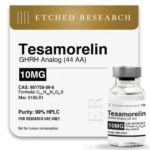
Research-grade material. A Janoshik report for this compound is available on request. For research use only.
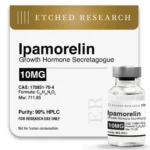
Research-grade material. A Janoshik report for this compound is available on request. For research use only.
For Research Use Only. Not for human consumption. Etched Research supplies compounds for laboratory and research use only. Nothing on this page is medical advice, a health claim, or a recommendation to use.