Research-grade material. The Janoshik lab result for this compound is on the COA page. For research use only.
Research-grade material. The Janoshik lab result for this compound is on the COA page. For research use only.
The research peptide supply market got smaller between 2025 and 2026. Several long-running suppliers stopped taking orders, and what filled the gap was not a comparable set of replacements. It was a larger number of newer sellers, of very uneven documentation quality, competing for buyers who had lost the source they had used for years.
That is the situation this article is written into. It covers what a buyer can actually check before ordering, what a laboratory report does and does not prove, and where Etched Research sits against the same criteria.
What Happened to the Market
Several long-running research peptide suppliers stopped taking orders between 2025 and 2026. Buyers who had used the same source for years lost it without notice, and the documentation they had relied on went offline with the storefronts.
What replaced them was not an equivalent set of suppliers. It was a larger number of newer sellers of very uneven documentation quality, competing for buyers who were suddenly shopping.
The lesson is not about any particular company. It is that a supplier relationship is only as durable as the supplier, and the time to evaluate one is before the order, not after the site goes dark mid-project.
What to Look for in a Supplier
The criteria that mattered in 2023 still matter. What changed is the cost of choosing badly. A supply disruption partway through a project is a setback, not an inconvenience. A longer treatment of this is in the guide to vetting a research source.
A report from a named laboratory. Not “third-party tested.” The laboratory has to be named, so the report can be checked against the lab that issued it. A report from an unnamed third-party lab is unverifiable by definition, and the phrase is doing marketing work rather than analytical work. Where an independent laboratory report exists for a compound, the measurements are published on the COA page, including the compounds we hold no report for.
Measured content against the labeled amount. This is the number most reports leave out, and it is the one that separates suppliers. Purity does not. Purity results across this category cluster near 99 percent, which makes purity a poor way to tell one supplier from another. Content weight does not cluster. Published third-party data across the wider market includes results at 44.8 percent under label and at 35.4 percent under label, and one batch returning 13.07mg in one vial next to 9.47mg in another. Ask how many milligrams were measured, next to what the label claims. If a report does not answer that, it is answering an easier question.
Identity confirmed by a stated method. Purity says how much of the sample is one compound. It does not say which compound. Mass spectrometry establishes identity. A high-purity preparation of the wrong material still fails, and the report should say which method established identity rather than implying it.
A lot number on both the report and the vial. A report certifies one lot. Without a lot number printed on both, nobody outside the company that ordered the test can tie the report to the material in hand. Missing lot numbers are the most common gap in this category, and it is worth knowing that Etched’s own published reports carry none, which is stated on the COA page rather than left for a buyer to discover.
Domestic fulfillment from a verifiable address. Domestic shipping matters for chain of custody and for import exposure. An overseas supplier shipping into the United States introduces uncertainty at the point of customs entry. A domestic supplier at a verifiable physical address is operating inside a traceable system.
A payment rail that names the business. This one gets stated badly almost everywhere, so here is the honest version. Card processing is frequently unavailable to suppliers in this category for reasons that have little to do with any individual supplier’s quality, and processors have been withdrawing from the whole category rather than from specific companies in it. So the absence of cards is not the signal. The absence of a named counterparty is. What to check instead: does the payment method show you the legal entity you are paying, does the rail leave a record on both sides, and is there a stated refund path. A supplier routing you to a peer-to-peer app under a personal name fails all three. Etched runs bank payment, not cards. Pay-by-bank at checkout, or bank transfer against an emailed invoice, both to the named LLC.
No human-use marketing. Read the product pages closely. A supplier promising results in days, or framing a compound around how a person will look or feel, is operating outside the research-use-only framework at the marketing layer whatever the label says. That is legal exposure for the supplier, and supply risk for anyone depending on them.
What a Lab Report Can and Cannot Tell You
Janoshik Analytical is a contract testing laboratory. Suppliers submit samples, pay for the analysis, and decide whether to publish the result. That is the normal arrangement across this category, and it is worth understanding, because it sets the limits of what any published report proves.
A report establishes what was in the sample that was submitted. It does not establish what is in a different vial from a different lot, and a supplier is under no obligation to publish a result it does not like. So the useful question is not whether a supplier shows a report. It is whether the report carries a named laboratory, a measured content figure against the labeled amount, a stated identity method, and a lot number that matches the vial in hand.
Reports missing the lot number are the most common gap. Without it, a report and a product cannot be tied together by anyone outside the company that ordered the test.
The lab test data Etched Research holds is listed on the COA page, including the compounds for which no report exists.
Where Etched Research Sits Against All of This
The catalog is 24 products. Twenty-one single-compound vials across nineteen compounds, plus three pre-blended vials. That is the whole shop, and it is smaller than most of the sites a buyer will compare it against.
The compounds are the ones with the deepest research records rather than the widest ones: BPC-157, TB-500, KPV, GHK-Cu and ARA-290 on the recovery and repair side, Ipamorelin, Tesamorelin and IGF-1 LR3 on the GH axis, NAD+, MOTS-c, SS-31 and Epithalon in cell energy research, Semax and Selank in cognitive, Thymosin Alpha-1 in immune, Retatrutide, 5-Amino-1MQ and Cagrilintide in metabolic, and PT-141. The three blends are BPC-157 + TB-500, GLOW and KLOW, and each ships as a single pre-blended vial rather than as a kit of parts.
Reports exist for some of those compounds and not others. The ones that exist were commissioned by the supply chain rather than by Etched, they carry no lot numbers, and most of the catalog has no report at all. All of that is written on the COA page, next to the measured content figures, because a page that only listed the compounds with results would be a marketing page.
That is the whole position. A short catalog, a public record of what has been measured including the gaps, domestic fulfillment, and a payment rail that names the company. Buyers who want a larger selection or a card checkout have other options, and this article is not going to pretend otherwise.
Frequently Asked Questions
Q: How do I check whether a Certificate of Analysis is legitimate?
A: Look for four things: a named laboratory, a measured content figure against the labeled amount, a stated identity method such as mass spectrometry, and a lot number that matches the vial you were shipped. Then look up the laboratory independently. If the lab cannot be found, or the report carries no lot number, treat it as unverified.
Q: What is Janoshik Analytical, and should I rely on it?
A: Janoshik Analytical is a contract testing laboratory. Suppliers submit samples, pay for the analysis, and decide whether to publish the result. Its public board is a record of what suppliers chose to submit and publish, not an independent survey of the market. Useful for exactly that reason, and best read alongside a supplier’s own report rather than in place of one.
Q: Should I avoid a supplier that does not take credit cards?
A: Not on its own. Card processing has been withdrawn from this category broadly rather than from individual companies in it, so its absence says little about any one supplier. The thing worth checking is whether the payment method names the business you are paying and leaves a record. A supplier asking for payment through a peer-to-peer app under a personal name is the actual warning.
Q: Are there research peptide suppliers still operating in 2026?
A: Yes. The market is smaller and the documentation quality across it is uneven, which puts more weight on the buyer’s own checks. The criteria are a named laboratory, measured content against label, a stated identity method, a matching lot number, domestic fulfillment, a payment rail that names the business, and no human-use marketing.
Before You Order Anywhere
Read the supplier’s lab data page before the product page. If it does not exist, that is the answer. If it does, check whether it lists the compounds with no report on it, because the ones that do are telling you something the ones that do not are hiding.
The Etched record is on the COA page, the catalog is at the shop, and a research summary for each compound is in the Research Library.
All products mentioned are for research use only. Not for human consumption.
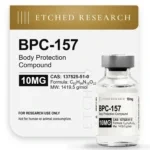
Research-grade material. The Janoshik lab result for this compound is on the COA page. For research use only.
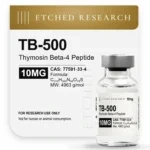
Research-grade material. The Janoshik lab result for this compound is on the COA page. For research use only.
New reports, new research.
We send a note when a new lab report is posted or a compound comes back in stock, plus a short list of new research pages in any month we publish some. Never more than one email a week, and nothing else.
For Research Use Only. Not for human consumption. Etched Research supplies compounds for laboratory and research use only. Nothing on this page is medical advice, a health claim, or a recommendation to use.