
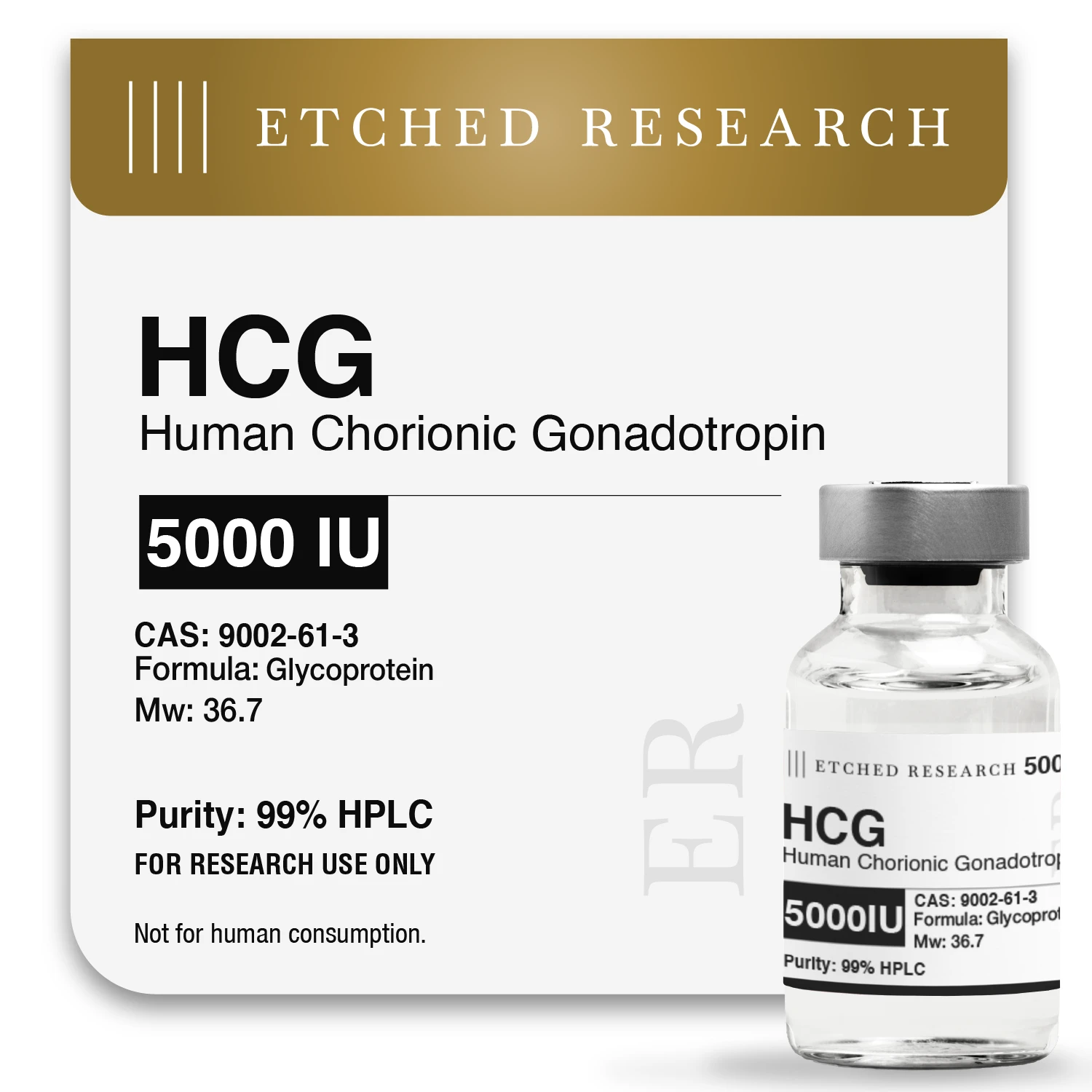
HCG (Human Chorionic Gonadotropin) is a glycoprotein hormone consisting of an alpha subunit (92 amino acids) and a beta subunit (145 amino acids) with extensive glycosylation, yielding a molecular weight of approximately 36,700 Da. The beta subunit shares significant homology with luteinizing hormone (LH), enabling it to bind and activate the LH receptor (LHCGR), the primary target for stimulating testosterone production in Leydig cells.
Research applications include Leydig cell stimulation models, testosterone biosynthesis pathway studies, HPG axis research, fertility and ovulation induction studies, and investigation of LH receptor signaling in both gonadal and extra-gonadal tissues. HCG’s structural similarity to LH while maintaining distinct pharmacokinetics makes it a valuable tool for comparative endocrinology research.
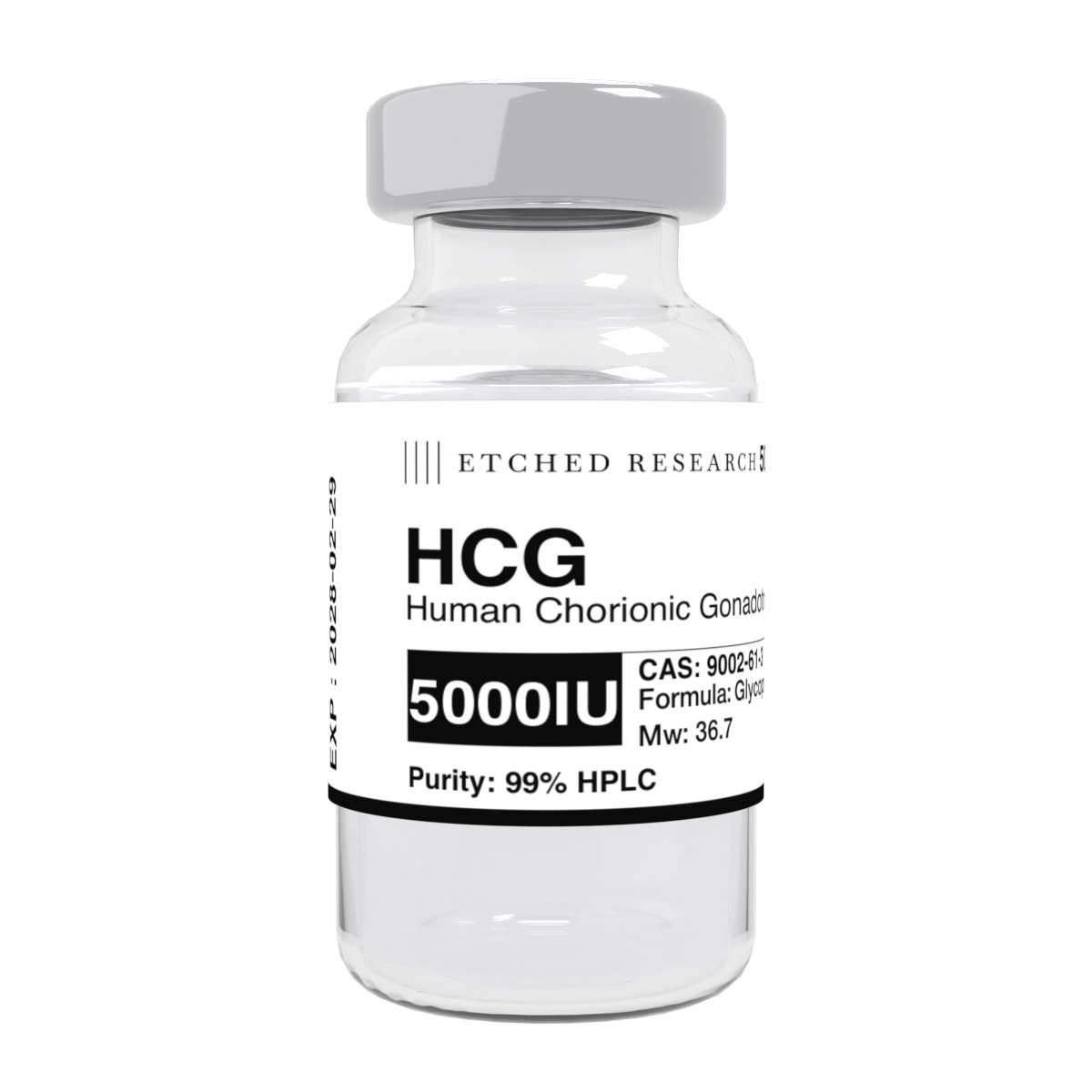
Each Etched Research vial contains 5000IU of lyophilized powder, purity-verified at ≥99% via HPLC. Batch-specific Certificate of Analysis included.
Specifications:
– Molecular Weight: ~36,700 Da (glycoprotein)
– Activity: 5000 IU per vial
– Purity: ≥99% (HPLC)
– Form: Lyophilized powder
– Storage: -20°C (lyophilized); 4°C once reconstituted, use within 30 days
FOR IN VITRO RESEARCH USE ONLY. NOT FOR HUMAN CONSUMPTION, INGESTION, OR ANY IN VIVO USE.
- What it is: HCG (human chorionic gonadotropin) is a natural hormone, also made in the lab, that acts on the testes much like the body’s own luteinizing hormone (LH).
- Researchers have studied it for: male fertility and sperm production, testosterone and testicular function when the brain’s gonadotropin signal is low, and keeping sperm production going in men on testosterone therapy (all in research and clinical-study settings).
- Evidence level: One of the better-studied compounds in this category. Decades of human clinical research, including a randomized controlled study and human trials, plus retrospective reviews.
- The short version: HCG is one of the most-studied hormones in male reproductive research. Scientists have looked at how the testes respond to it, how testosterone is made inside the testicle, and how sperm production behaves under different conditions. Everything below describes what happened in study models, not what it does for any person. Research use only.
Reviews
There are no reviews yet.