
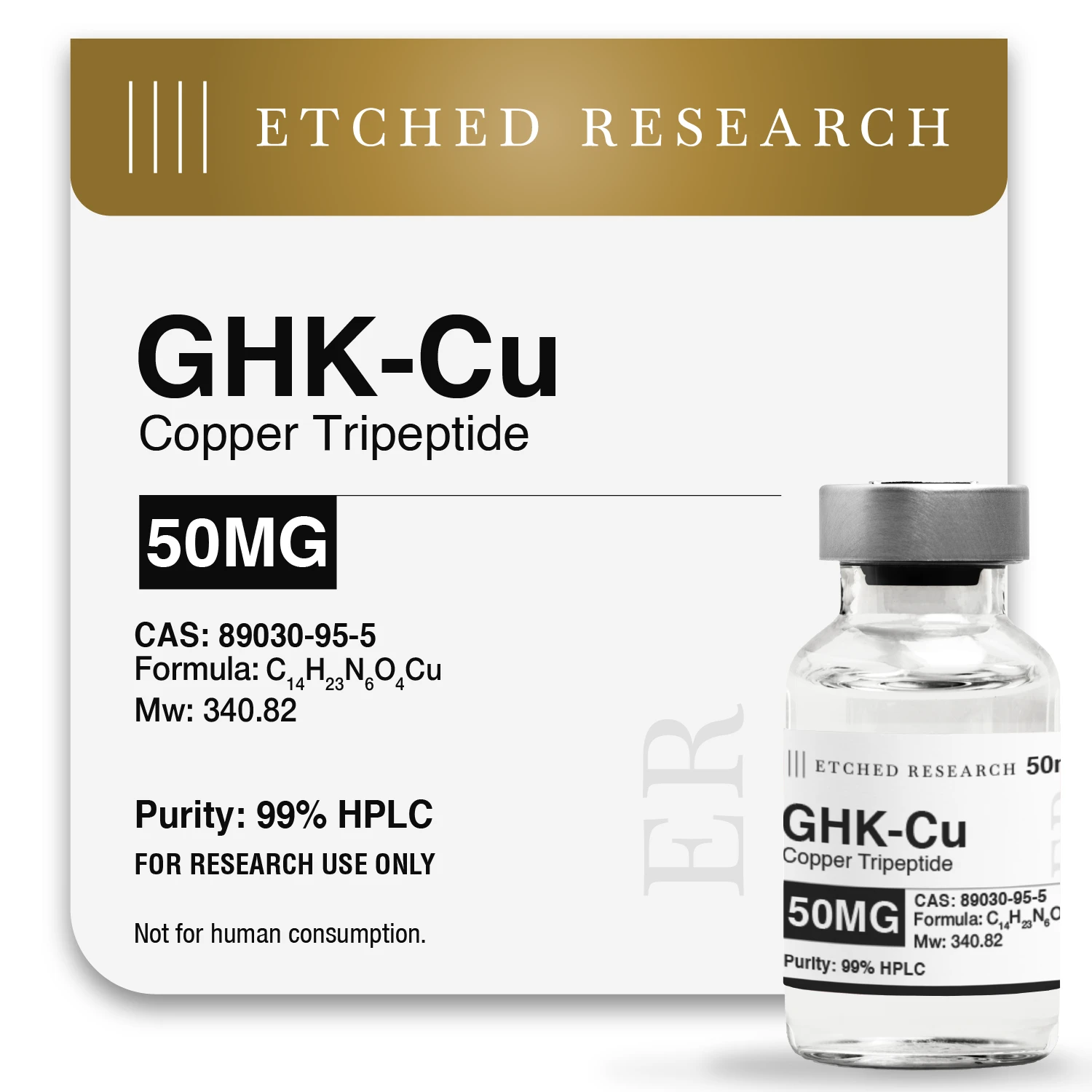
About GHK-Cu (Copper Peptide)
GHK-Cu, glycyl-L-histidyl-L-lysine copper(II), is a naturally occurring copper-binding tripeptide first isolated from human plasma. Plasma concentrations of GHK-Cu decline significantly with age, a finding that has driven research interest in its potential roles in tissue maintenance and repair.
Research Applications
GHK-Cu is studied for collagen and glycosaminoglycan synthesis, fibroblast activity, anti-inflammatory effects via cytokine modulation, and emerging research on neurotrophin expression. The 50mg vial size is suitable for standard reconstitution research protocols.
For in vitro research use only. Not for human or veterinary use, therapeutic, or diagnostic purposes.
Research at a Glance
- What it is: A small copper-binding tripeptide, three amino acids locked to a copper ion.
- Researchers have studied it for: how copper-peptide biology drives matrix remodeling, growth-factor output, and gene expression in cell and animal models.
- Evidence level: Almost all preclinical (isolated cells and short animal work). One human wound-repair trial is registered but still recruiting.
- The short version: Most of what researchers know about GHK-Cu comes from cells in a dish and short animal studies of copper-peptide biology. They frame it as a modulator of tissue remodeling, but the human case is not settled. This is a summary of research, not a reason to use anything.
Reviews
There are no reviews yet.